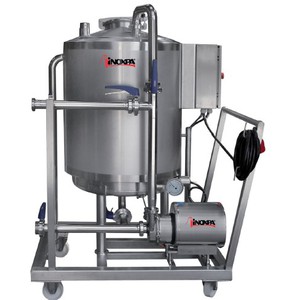
CIP (Clean in Place) and SIP (Steam in Place) Automatic Systems
HD Process supplies automatic CIP (Clean-in-Place) and SIP (Steam-in-Place) systems for hygienic production facilities. These systems are used to clean, disinfect or sterilise compatible tanks, pipelines and process equipment using predetermined operating sequences.
Applications include beverage, dairy, juice, brewing, sugar, biological and pharmaceutical processing. Systems are configured around the equipment being serviced, the required cleaning or sterilisation procedure and the utilities available at the site.
Clean-in-Place and Steam-in-Place Processes
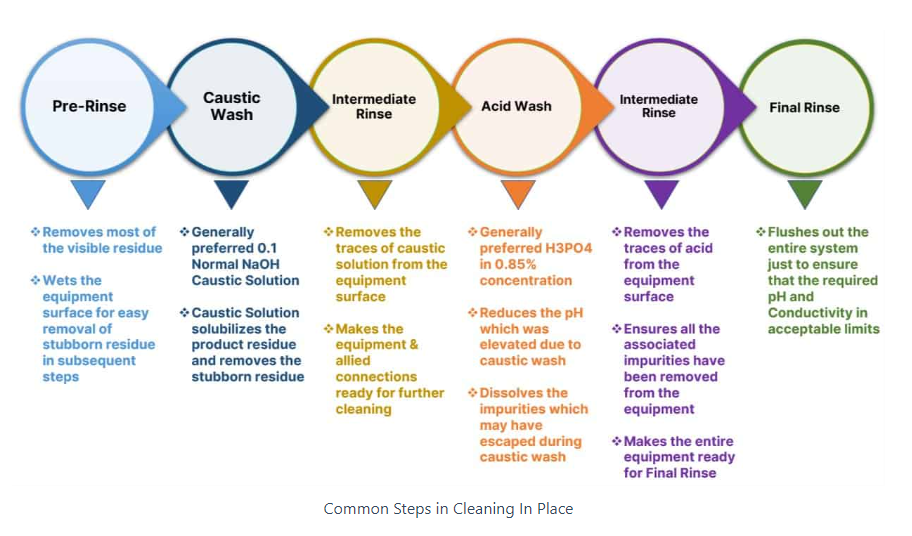
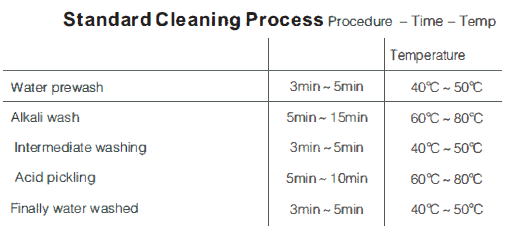
CIP systems circulate water and cleaning solutions through connected process equipment without requiring the complete circuit to be dismantled. A typical CIP sequence may include a water pre-rinse, alkaline wash, intermediate rinse, acid wash and final water rinse.
SIP uses steam to sterilise compatible equipment following cleaning. The process equipment, seals, valves, instruments and pipework must all be suitable for the required steam conditions. The exact CIP or SIP sequence is determined by the process, product residues and site hygiene requirements.
Static and Mobile System Configurations
Automatic cleaning systems are available in static and mobile arrangements:
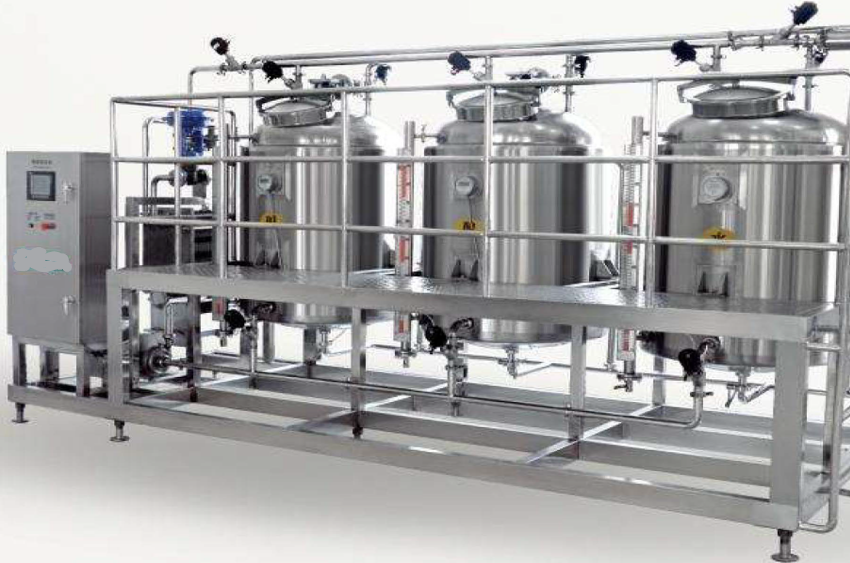
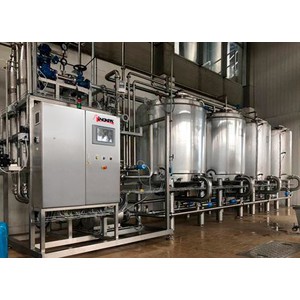
- Static CIP systems provide a permanently installed cleaning station for one or more process circuits
- Mobile CIP systems can be moved between compatible tanks or processing areas
- Single or multiple-tank arrangements can be configured for the required cleaning stages
- Three-tank systems commonly provide separate storage for water, alkaline solution and acid solution
Available cleaning tank capacities vary according to the system configuration, with standard CIP arrangements covering tank sizes from approximately 100 L to 4,000 L. Larger or customised systems can be considered where required.
Automated Cleaning Recipes and Process Control
A PLC and touchscreen interface can control multiple cleaning recipes, including the sequence and duration of each stage. Depending on the selected system, automatic control may also cover solution heating, tank filling, circulation, chemical dosing and solution recovery.
Typical system equipment and instrumentation may include:
- Cleaning-fluid storage tanks, piping and distribution manifolds
- Booster and recirculation pumps
- Acid and alkaline chemical metering pumps
- Pneumatically operated control valves
- Plate heat exchanger with temperature control
- Conductivity, temperature and liquid-level instruments
- PLC, touchscreen and electrical control cabinet
Flow, Heating and Cleaning Device Selection
The circulation pump is selected to provide the flow and pressure required by the pipework, tanks and cleaning devices. Pipe diameter has a significant influence on the required flow rate, with approximately 2 m/s commonly used as a target velocity for suitable pipeline-cleaning duties.
Cleaning solutions can be heated using a plate-and-frame heat exchanger, heating coil, tubular heat exchanger or direct electric heating. Spray balls and other tank-cleaning devices must be sized and positioned for the vessel geometry, required flow and available pressure.
Contact HD Process with your process equipment, cleaning circuits, required CIP or SIP sequence, available utilities and preferred automation level to discuss a suitable system configuration.